Low water does not necessarily mean poor fishing. It means the lake has changed, and anglers need to change with it.
During Bass Fishing in Lake Hartwell, falling water can expose familiar cover, move bass toward deeper structure, concentrate baitfish, and make some launching areas harder to use. Anglers who recognize these changes can often eliminate unproductive water faster.
First, What Counts as Low Water on Lake Hartwell?
A drop of several feet can change how shallow cover looks and how easily boats reach certain areas. It can also make yesterday’s productive shoreline pattern less reliable.
The current lake elevation matters more than whether someone simply describes the water as “low.” Check official lake information before planning a Lake Hartwell fishing trip.
Bass Pull Away from Some Shoreline Cover
Bass commonly relocate toward the nearest available depth change. That may be the outer edge of a dock, the first drop beyond a point, a creek channel, submerged timber, or deeper rock.
This does not always mean running far offshore. A bass may move only a short distance if suitable cover and deeper water remain nearby.
Anglers unfamiliar with these transitions can review Where Is the Best Bass Fishing on Lake Hartwell? for a broader look at productive areas around the reservoir.
Points and Channel Edges Become More Important
Rather than fishing every visible object, concentrate on places where two useful features meet. A rock point beside a channel, standing timber near a drop, or a dock with deeper water can offer bass food, cover, and quick access to comfortable depths.
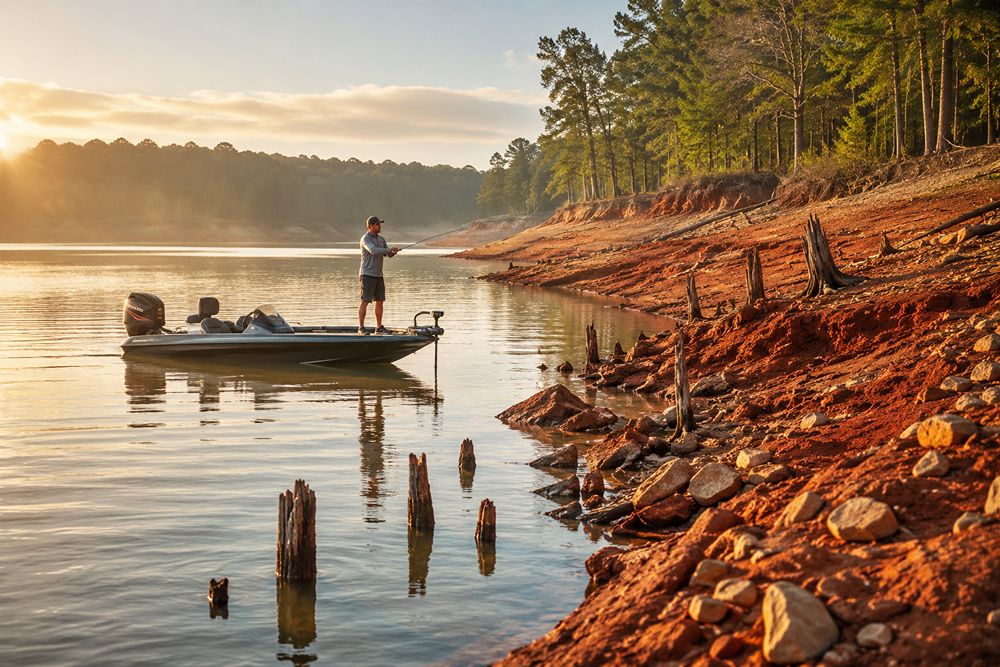
Electronics help, but careful observation also matters. An exposed bank can reveal rock veins, old roadbeds, stumps, and changes in bottom composition that continue underwater.
Baitfish Can Become Easier to Locate
Watch for surface activity, birds, bait on sonar, or small fish holding near the ends of points. If an area looks attractive but contains no visible forage, avoid spending too long there.
Season still influences where bait and bass gather. What Are the Best Seasons to Fish in Lake Hartwell? provides useful context for matching water-level changes with seasonal fish behavior.
Your Lure Selection May Need to Change
Crankbaits can help search points and rocky transitions. Jigs, shaky heads, and Texas-rigged soft plastics allow anglers to slow down around brush, docks, and bottom changes.
Topwater lures may still produce during low-light periods when bass push bait toward the surface. However, bright conditions may send fish toward shade or deeper cover sooner in the day.
Water clarity also matters. Lower levels do not automatically mean clear water, especially after rain or heavy boat traffic. Choose lure color, size, and action according to the conditions you see rather than the lake level alone.
Largemouth and Spotted Bass May Respond Differently
Largemouth bass may remain around protected pockets, brush, docks, and remaining shallow cover when conditions suit them. Spotted bass are often associated with points, deeper structure, rock, and open-water forage.
Knowing which species you are targeting helps you decide whether to search remaining shoreline cover or move toward deeper main-lake features. Read Largemouth Bass vs. Spotted Bass: What Every Lake Hartwell Angler Should Know for help distinguishing their habits and appearance.
Low Water Can Make Boat Access More Difficult
The U.S. Army Corps of Engineers advises boaters to inspect ramps carefully because their usability changes with lake elevation. Some ramps have ending elevations below which launching may no longer be suitable.
Review Where are the Best Public Boat Ramps on Lake Hartwell for Fishing? and identify a backup launch before leaving home. Never assume a ramp that worked during your previous visit will be suitable under current conditions.
Navigation Requires More Attention
Follow navigation markers, observe warning buoys, and keep a safe distance from docks, swimmers, structures, and other boats. Georgia boaters must remain at least 100 feet away unless operating at no-wake speed.
Every vessel must also carry an appropriately sized wearable personal flotation device for each person aboard. Required safety equipment should remain accessible rather than buried beneath fishing gear.
Can Low Water Actually Improve Bass Fishing?
The challenge is resisting the urge to fish memories. A productive dock, pocket, or bank from normal water may no longer offer enough depth or cover.
Use the exposed shoreline as a map. Look for transitions that continue into the water, find nearby depth, confirm the presence of bait, and then choose a lure that stays in the strike zone.