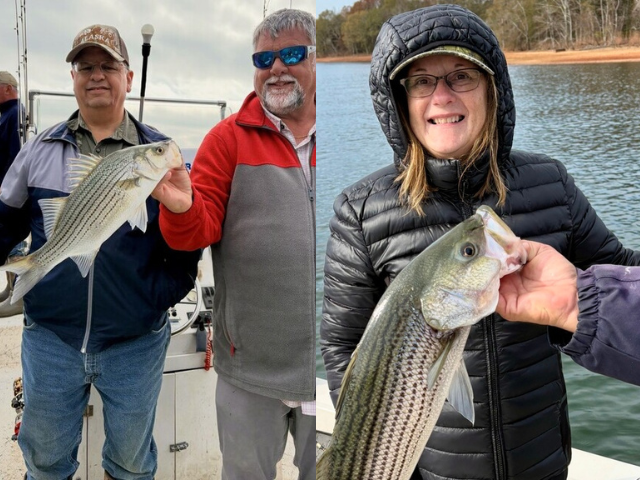
If summer striper fishing on Hartwell has ever felt like “either you are on them or you are nowhere close,” you are not imagining it. In summer, striped bass in Lake Hartwell are heavily controlled by water temperature and dissolved oxygen, so depth matters more than almost anything else.
Instead of chasing one exact number, this guide shows you how to fish a depth range using a simple “depth ladder” you can adjust in minutes.
Quick rule that helps most anglers
Many Hartwell reports and biology notes point to a summer setup where fish hold near the thermocline and the best action often centers around the mid-depth band, not the hottest surface layer or the lowest oxygen water.
The Lake Hartwell summer depth ladder (use this on the water)
Step 1: Check 20 to 35 feet first
Some Hartwell-specific reports place summertime fish “on top of the thermocline” or around that band, and anglers commonly run baits in the mid-20s to low-30s.
When this band shines
- first light through early morning
- over deep water when bait is visible on sonar
- when you see fish suspended rather than glued to the bottom
Step 2: Slide deeper if the sun is high
USACE explains that as summer heat builds, cool-water fish like striped bass have to move deeper as surface temperatures rise.
A practical shift is to work 30 to 50 feet next, especially if you mark arcs deeper or bait is lower in the water column.
Step 3: Do not be surprised by 40 to 80 feet days
Hartwell summer coverage has documented typical depths of 40 to 80 feet and sometimes more during certain summer conditions.
When deep water matters
- midday and afternoon
- when fish are tight, inactive, or you are marking them near bottom
- when you are hovering over channels or steep breaks
The “why” behind summer depth on Hartwell
Why do stripers leave the top in summer?
Why not just fish the deepest water you can?
Best depth by time of day (simple and realistic)
Early morning
If you find suspended fish around the thermocline band, keep your offering slightly above them and you will usually get more consistent bites.
Midday
Summer heat and low oxygen issues on Hartwell are well documented, so a midday depth change is often the difference between a slow trip and a productive one.
Evening and night
If you are planning summer night fishing, stay disciplined about safety and visibility on busy water.
What to fish at those depths (without overcomplicating it)
USACE lists blueback herring and other baits, plus jigs, plugs, and spoons for striped bass, which fits the “live bait + search lure” approach many guides use in summer.
Common issues anglers hit (and the fast fix)
I’m marking fish at 30 feet but they will not bite.
- put your bait a little above the fish rather than right on them
- slow down and hold your bait at depth longer
Thermocline-related positioning and comfort zones are a big reason fish show on sonar but do not always commit.
My fish keep dying when I release them in summer
If you plan to release fish, keep handling time short, limit air exposure, and avoid long fights when possible.
I do not know where to start on the lake.
A quick regulation note for Hartwell anglers
South Carolina’s Hartwell regulation states it is unlawful to possess more than 10 striped or hybrid bass per day combined, and only 3 may be over 26 inches.
Because regulations can vary by specific area and season, confirm what applies where you are fishing before your trip.