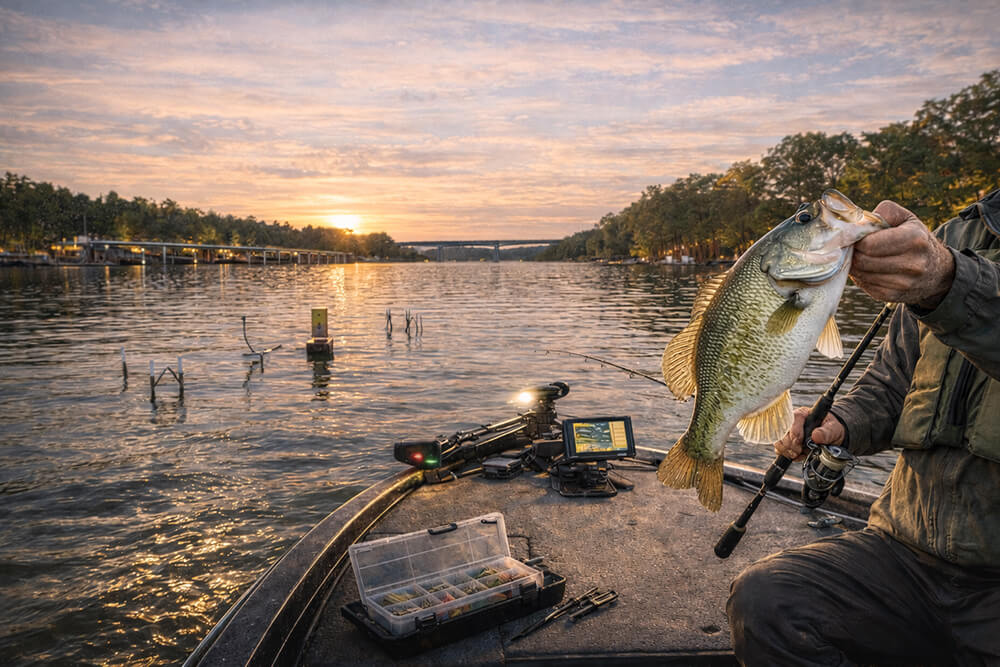
If you have ever watched your sonar light up with fish on Lake Hartwell, only to come home with an empty live well, you are not alone.
Crappie in Lake Hartwell can be wildly predictable one week and stubborn the next. The good news is that once you understand the seasonal movements and the types of structure they love, Crappie Fishing in Lake Hartwell becomes a lot less mysterious.
This post breaks down best months, where to look, and what actually works so you can fish smarter, not harder.
Quick answers anglers want first
What are the best months for crappie on Lake Hartwell?
Can you keep crappie from Lake Hartwell?
- Georgia daily limit: 30 crappie (black and or white).
- South Carolina (Hartwell listed waters): 20 crappie with an 8-inch minimum length.
Lake Hartwell sits on the Georgia–South Carolina line, and while the license is reciprocal, regulations can differ by state waters.
Is night fishing a real crappie pattern on Hartwell?
A quick legal and safety checklist for Lake Hartwell, GA
- Have a valid fishing license. Georgia and South Carolina have a reciprocal agreement for Lake Hartwell and its tailwaters, meaning a license from either state can be used on the lake.
- Follow the creel rules for the waters you are on. Georgia’s crappie limit differs from South Carolina’s Hartwell limits.
- If you fish at night from a boat, run proper navigation lights and use common-sense visibility practices. The lake gets busy, and bridge areas attract a lot of boats after dark. (This is practical safety, not a special Hartwell-only rule.)
The “best months” breakdown (what crappie are doing and how to match it)
February to early March: Pre-spawn staging
- Where to look: creek mouths, channel edges, the first deeper breaks near spawning pockets
- Best approach: slow trolling or spider rigging with minnows, or tight-lining small jigs along structure
Key idea: You are looking for groups, not singles. When you catch one, work that exact depth again.
Late March to May: Spawn and shallow bite
- Where to look: protected pockets, shallow brush, docks, warmer banks in creeks
- Best approach: a slip float and minnow, or a 1/32–1/16 oz jig worked slowly
Tip: If the water is stained after rain, crappie often hold tighter to cover and can be easier to predict.
June to August: Summer structure bite (deeper, but consistent)
- Where to look: brush piles, timber lines, creek channels, deeper docks
- Best approach: vertical jigging, shooting docks, or slow trolling at a controlled depth
When you hear someone say crappie “disappear” on Hartwell, they usually mean they moved deeper and got more depth-specific.
September to November: Fall roaming and feeding
- Where to look: mid-depth brush, bait schools in major creeks, bridge areas at certain times
- Best approach: small jigs that match bait size, or minnows when they get picky
December to January: Winter deep holding pattern
- Where to look: deeper timber, steep drops, channel swings
- Best approach: vertical presentations and patience
Top crappie “spot types” on Lake Hartwell (so you can find your own honey holes)
1) Bridge zones at night or during feeding windows
What to do: set up safely, fish the shadow lines, and present minnows or small jigs at the depth you mark.
2) Fish attractors and artificial reefs
What to do: fish the perimeter first, then move tighter once you confirm the depth.
3) Brush piles and creek channels
What to do: find brush near a channel edge, then work it vertically. If the fish are suspended, hold your bait slightly above them.
4) Docks (especially in spring and summer)
What to do: shoot small jigs deep under the dock, or fish a minnow around the posts.
5) Timber lines
What to do: use vertical presentations and watch your line, bites can feel like nothing.
Proven catching techniques that work on Hartwell
Minnows when the bite is tough
How to use them:
- under a slip float in shallow water
- tight-lined or vertical in deeper brush
Jig system that covers most situations
- 1/32 oz for shallow, slow presentations
- 1/16 oz for deeper water or wind
The biggest mistake: working it too fast. Crappie often want a slow glide or a steady hover.
Vertical jigging over brush
- drop to the depth you mark
- lift gently, pause, and repeat
- if you get one bite, stay there and work the school
Light fishing under bridges (night pattern)
Best practice: keep your setup tidy and your boat visible. Bridges attract multiple boats at night.
Common problems and quick fixes
“I’m marking fish but they won’t bite.”
- downsize your jig or switch to a minnow
- slow your presentation
- move your bait slightly above the fish
- back off the structure and fish the edges
This situation is exactly what many anglers struggle with, as outlined in How to catch crappie when they won’t bite in Lake Hartwell?
“I’m catching small ones.”
- move deeper to older fish holding on brush
- avoid the shallowest spawning pockets once the spawn peaks
- follow the schools, not the bank
“I only have a couple hours. What’s the fastest plan?”
- pick one major creek
- scan for bait and structure
- fish two depths only (one shallow, one mid-depth) until you get a pattern
What to ask before booking Lake Hartwell Fishing Guides
Simple “trip checklist” for better crappie days
- bring two rod setups (minnow and jig)
- commit to a depth range and test it, don’t randomly hop depths all day
- if you catch one, slow down and work the area
- keep track of the depth, water clarity, and time of day that produced